Why Repeatability Matters as Much as Accuracy in Precision Manufacturing
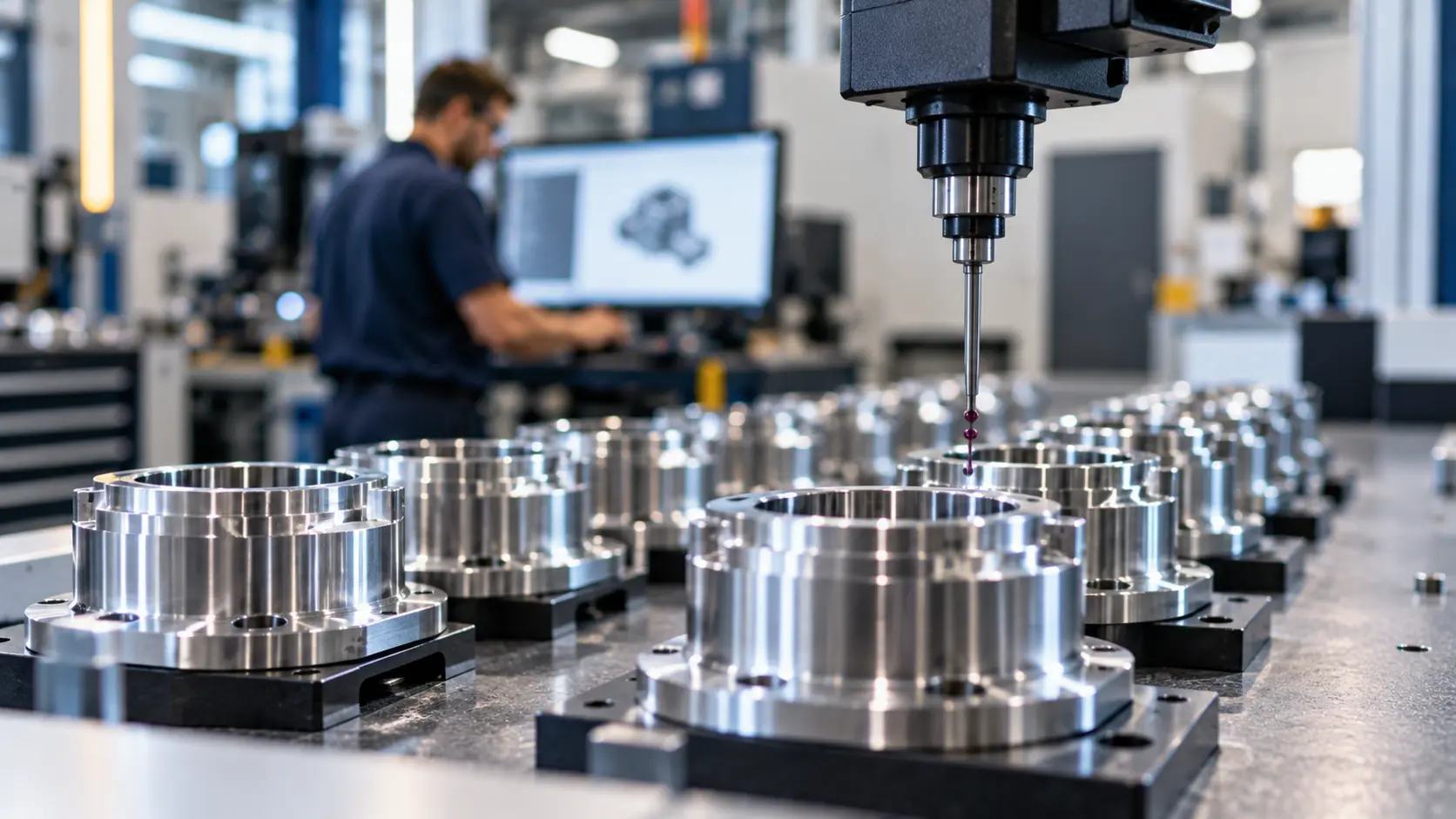
In precision manufacturing, hitting the exact specification is a big deal. The real challenge is delivering that same level of accuracy again and again, across hundreds or thousands of parts, multiple production runs, and changing operating conditions.
That’s where repeatability becomes just as important as accuracy. For manufacturing leaders, the difference isn’t simply technical.
It affects production costs, quality, customer confidence, and the ability to scale without sacrificing performance.
Accuracy Gets You There, Repeatability Keeps You There
Accuracy and repeatability are closely connected, but they’re not interchangeable. Accuracy means producing a part that closely matches its intended dimensions or specifications.
Repeatability means consistently achieving the same result under the same production conditions. Imagine a manufacturer producing a precision metal component with extremely tight tolerances.
The first part comes off the line perfectly, but the next five are slightly different. By the twentieth, several are outside acceptable limits.
The process was accurate, just not reliably repeatable. There will always be variation in any manufacturing process, so the key is to understand and control it to ensure a stable, predictable production process.
One perfect part proves you’re capable, but consistently producing acceptable parts proves a process is reliable.
Inconsistent Results Get Expensive Fast
Small variations create surprisingly large business problems. When manufacturers struggle to consistently reproduce the same results, the consequences often extend well beyond the production floor when a batch of precision components fails inspection.
Material waste increases, and parts may be reworked or even scrapped. Production schedules get hit as the team is spending time in troubleshooting rather than actually making the product.
Quality costs increase with additional inspections and the resources required for corrective actions. Customer relationships are damaged by inconsistent deliveries and component performance, which erodes trust.
Scaling becomes harder as a process that only works intermittently is very difficult to scale with any degree of confidence. This is particularly important in an industry where components have to fit, work, and perform within the context of a larger assembly.
Research emphasizes that evaluating manufacturing processes and measurement systems helps organizations make objective decisions about product quality and process capability. Repeatability is a quality metric that’s an important part of protecting profitability.
Repeatability Starts Long Before Final Inspection
Repeatability is a function of how well the whole manufacturing process works together. That’s material consistency, tooling conditions, equipment calibration, the production process itself, operator training, and environmental factors.
Even small changes in these areas can influence outcomes. A production process might perform perfectly during an initial run but experience variation as tooling wears or operating conditions change.
The solution is better control throughout the production process. NIST identifies understanding and reducing sources of process variation as essential activities in maintaining stable manufacturing operations.
The goal is to build quality into the process rather than depend on catching problems afterward.
Reliable Measurement Is Part of the Equation
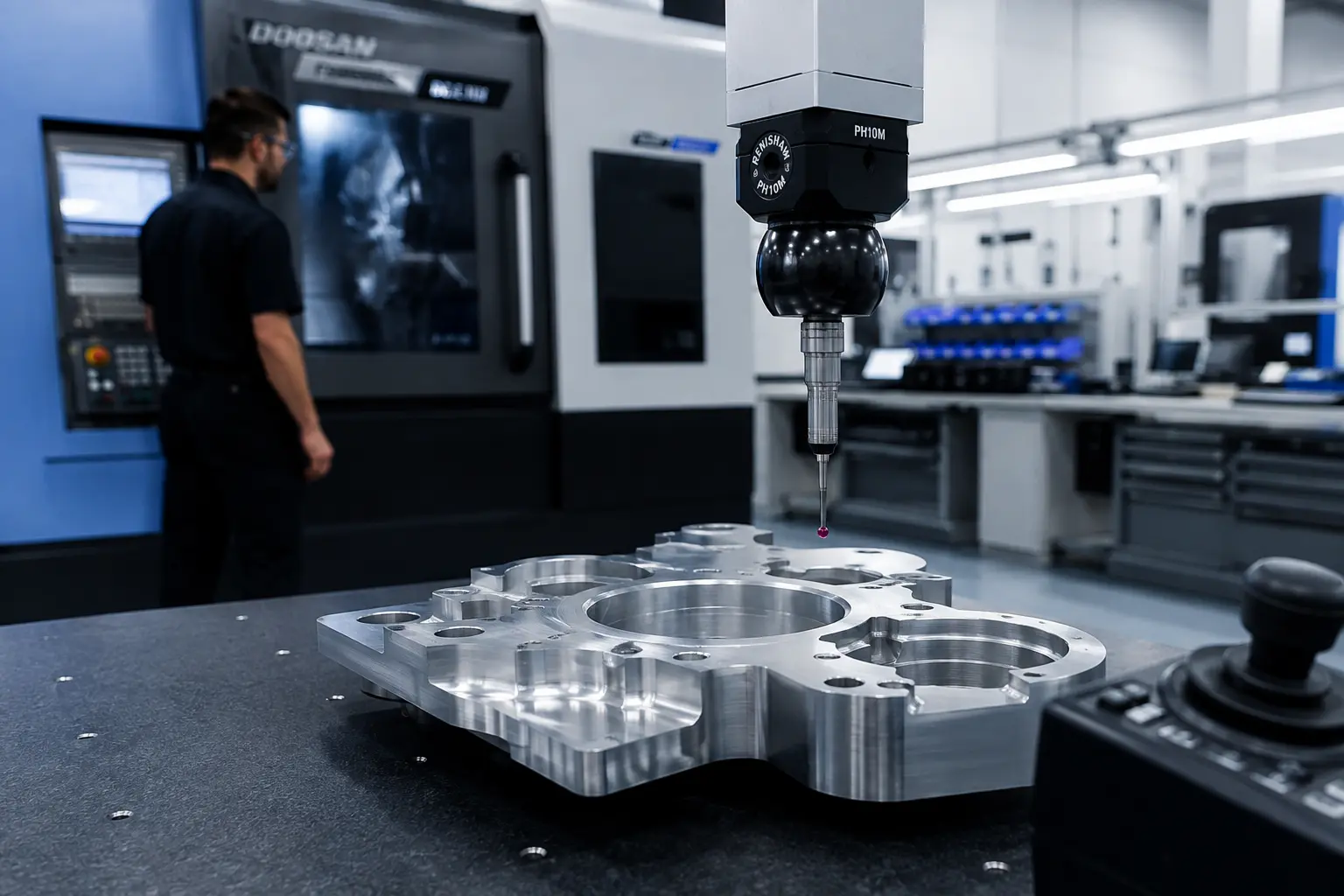
You can’t confidently improve repeatability if your measurements aren’t reliable. If two inspections of the same component produce different readings, how do you know whether the manufacturing process or the measurement system is responsible?
That’s why measurement repeatability and reproducibility matter. The American Society for Quality explains that Gage Repeatability and Reproducibility (Gage R&R) studies help distinguish variation caused by measuring equipment and operators from actual differences between manufactured parts.
Reliable measurement provides a much better basis for production decisions. It enables the team to identify the real problems, avoid all the wrong sorts of adjustments, and have confidence that the components being produced are, in fact, meeting the requirements.
Why Repeatability Becomes More Valuable as Production Scales
As volumes increase, small variations become more significant. A process that relies heavily on individual tweaking and constant ‘fixing’ will work at low volumes but will quickly become unmanageable as volumes increase.
Repeatable processes make scaling far more predictable. They enable the manufacturer to establish reliable production schedules, maintain consistent quality, reduce the amount of intervention that’s needed, and plan capacity with far greater confidence.
This also underpins the relationship with customers who rely on the component to perform consistently from order to order. Repeatability, reproducibility and stability are all key attributes when assessing and controlling a measurement process.
That consistency provides greater predictability, which every manufacturing operation requires.
Building a Culture of Consistency
Meaningful progress begins with disciplined operational practice. Manufacturing leaders can improve repeatability by standardizing their processes, monitoring equipment performance, having a reliable measurement system, and, of course, tackling variation as and when it arises.
Just as importantly, teams need to understand why consistency is important. When people understand how small variations can affect productivity, the rest of the operation, and customer satisfaction, quality becomes a shared responsibility rather than just something you check.
Precision Manufacturing Is About Getting It Right Every Time
Accuracy is absolutely fundamental in precision manufacturing. The customer wants components that meet the specification, and the manufacturer has to deliver them.
But accuracy without repeatability leads to uncertainty. The precision that manufacturers need to be successful in the long term is in their ability to deliver components to specification and to have the processes in place to produce them consistently.
In precision manufacturing, getting it right once demonstrates what’s possible. Getting it right repeatedly builds a business customers can depend on.
If you have any questions, you can call 972-461-1920 or email sales@Gemco-MFG.com.
About Gemco
Precision CNC turning and milling for oil & gas, aerospace, defense, medical, and industrial customers, handling jobs complete since 1967.