What the Future of Precision Manufacturing in America Looks Like Today
Precision manufacturing has always been about making things accurately. But the definition of “precision” is getting bigger.
Today, it isn’t just about maintaining tight tolerances or producing a flawless component. It’s increasingly about connecting machines, people, data, inspection, automation, and decision-making into a manufacturing process that’s faster, more predictable, and easier to adapt.
For American manufacturers, that gives us a clear picture of where the industry is heading: more connected, intelligent, automated, and still heavily dependent on skilled people who know how to make things right.
AI Is Moving From the Office to the Shop Floor
Artificial intelligence gets plenty of attention, but its most important manufacturing applications may be surprisingly practical. Applications such as advanced sensing, robotics, autonomous systems, digital twins, supply chain optimization, additive manufacturing, and industrial data analytics originate from the tool.
For a precision manufacturer, that means using machine and production data to identify problems earlier, improve scheduling, predict maintenance needs, or detect process changes before they lead to scrap. The goal isn’t simply “put AI in the factory.”
The real opportunity is to give experienced people better information earlier.
Digital Twins Could Make Trial-and-Error Less Expensive
Another technology advancing in manufacturing is the digital twin, a virtual representation of a physical machine, process, or manufacturing system. NIST says digital twins help manufacturers monitor operations, detect anomalies, predict system behavior, evaluate alternative production plans, optimize equipment settings, and improve maintenance decisions.
That’s particularly interesting in precision manufacturing. When parts involve expensive materials, complicated setups, demanding specifications, or long machining cycles, learning through physical trial and error becomes costly very quickly.
The ability to model more of the process before committing machine time could help manufacturers reduce uncertainty and make better use of their equipment. NIST estimates that widespread adoption of digital twins could generate roughly $37.9 billion in annual benefits across U.S. manufacturing.
Quality Control Is Becoming More Predictive
Traditional quality control asks, “Have we produced the part correctly?” In the future, the question will increasingly be, “Can we tell whether we are producing it correctly as we are producing it?”
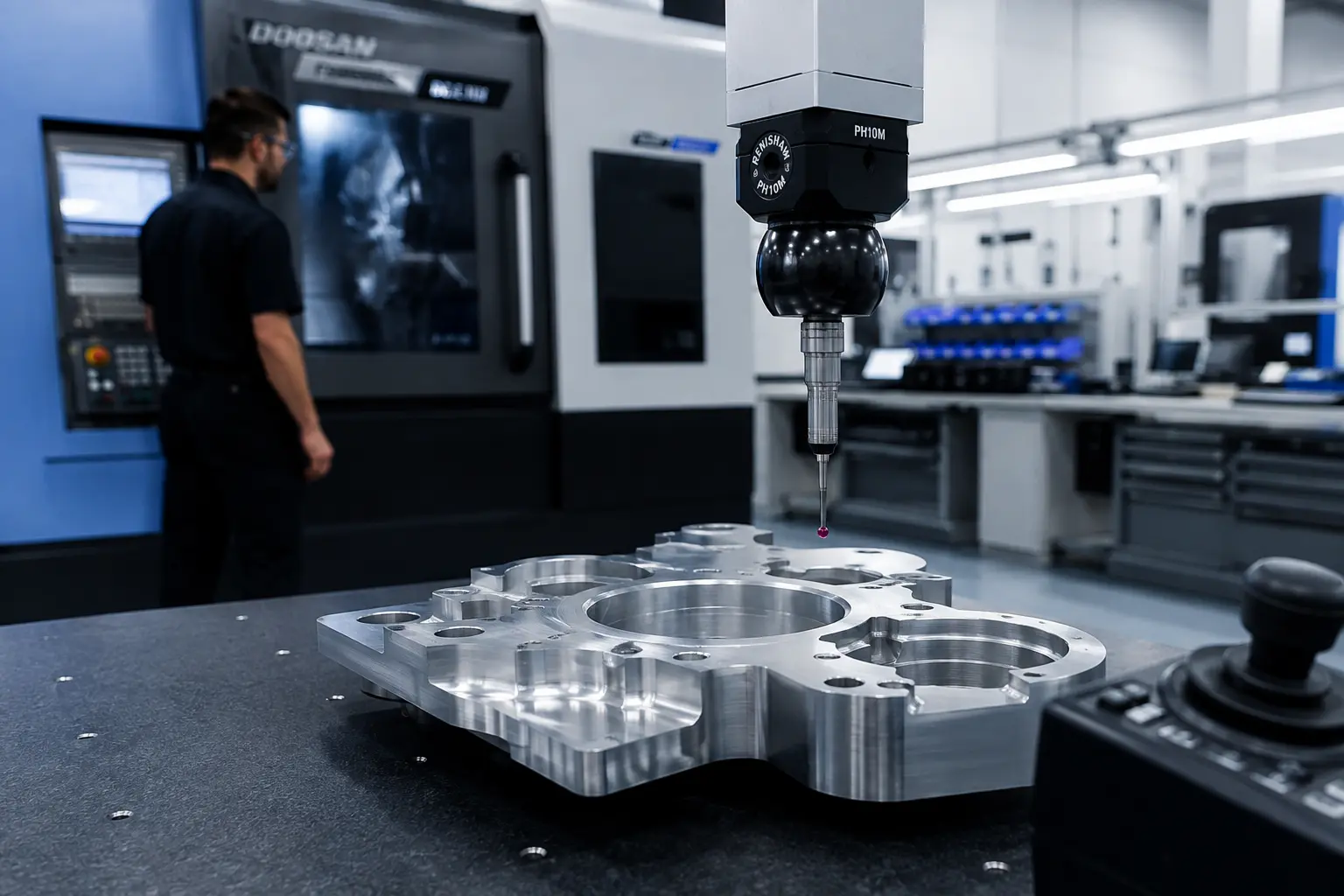
The use of better sensors, connected equipment, machine data, metrology, and analytics is bringing quality-related information closer to the manufacturing process itself, which is important since precision manufacturers require not just speed but consistent speed.
Producing more parts doesn’t help much if variation, rework, inspection bottlenecks, or scrap increase as production increases. NIST’s work in additive manufacturing, for example, examines how AI, digital twins, product data, machine learning, and advanced informatics reduce lead times and support the goal of getting the first part right.
That same mindset applies far beyond additive manufacturing: capture better information, understand the process earlier, and prevent problems instead of discovering them afterward.
Automation Won’t Eliminate the Need for Manufacturing Talent
The factory of the future will have more robotics, automation, intelligent equipment, and software. That doesn’t mean people become less important.
It means the skills manufacturers need will continue to evolve. The National Science Foundation identifies advanced manufacturing as one of the critical fields where the United States continues to face skill gaps and workforce shortages.
Its current strategy emphasizes developing talent through education, hands-on experience, reskilling, and training for skilled and trade workers. That makes workforce development a business issue, not simply an HR issue.
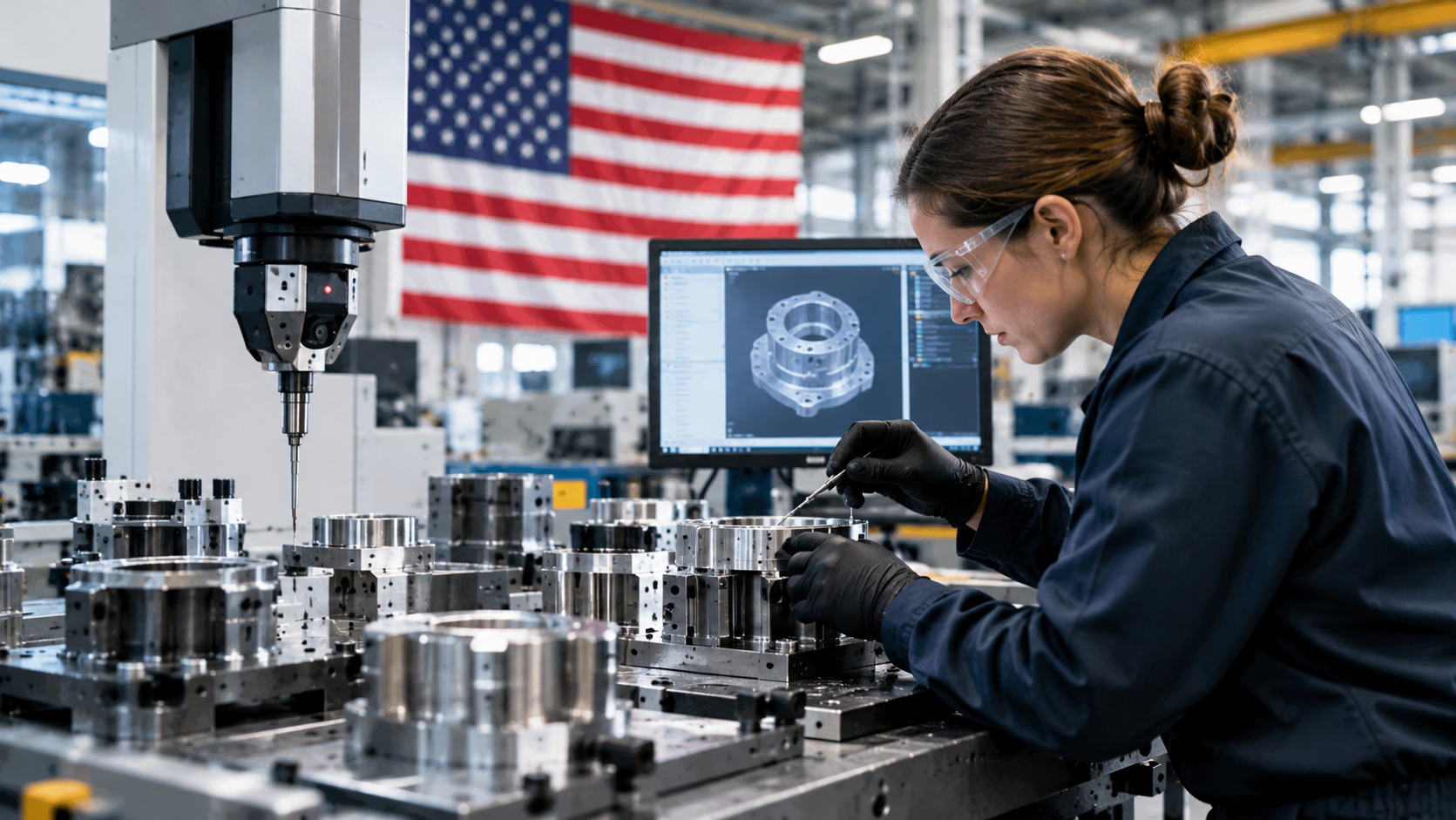
The most powerful future manufacturing teams will integrate traditional machining knowledge with robotics, programming, metrology, automation, data analysis, and advanced process control. Experience isn’t vanishing.
Better tools are enhancing it.
Connected Doesn’t Automatically Mean Better
There’s an important reality check here. Buying advanced equipment doesn’t automatically create an advanced manufacturing operation.
Recent work on digital twins points to continuing challenges around interoperability, cybersecurity, verification, validation, data quality, and workforce readiness. That’s a valuable lesson for manufacturers considering any major technology investment.
The question shouldn’t be “What’s the newest technology we can buy?” It should be “What production problem are we trying to solve?”
Reducing setup time, improving machine utilization, catching quality problems earlier, increasing traceability, shortening lead times, or improving scheduling are measurable objectives. Technology becomes valuable when it helps achieve them.
The Future Is Still About Making Better Parts
For all the discussion around AI, robotics, digital twins, smart factories, and connected equipment, the basic job of precision manufacturing hasn’t changed. Customers still need the right part, made to the right specifications, delivered when promised.
What is changing is how manufacturers achieve that result. The future of American precision manufacturing looks less like machines replacing people and more like machines, software, data, automation, inspection, and experienced manufacturing professionals working together.
The companies that prepare for that future won’t necessarily be the ones with the most technology. They’ll be the ones that know where technology actually improves precision, quality, productivity, and reliability, and where skilled human judgment still matters most.
If you have any questions, you can call 972-461-1920 or email sales@Gemco-MFG.com.
About Gemco
Precision CNC turning and milling for oil & gas, aerospace, defense, medical, and industrial customers, handling jobs complete since 1967.